
How cooperatives contribute to the UN Food Systems Summit objectives
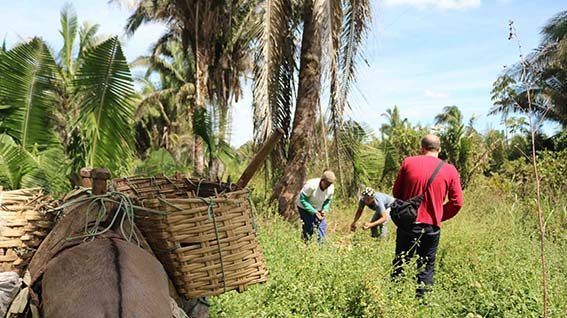
Photo: members of the COPPALJ cooperative, (c) Aroundtheworld.coop
Cooperatives play a fundamental role in improving the functioning of global food systems. They were created to empower producers and consumers as well as to shorten supply chains by eliminating unnecessary intermediaries.
Ahead of the UN Food Systems Summit 2021 on 23 September, the International Cooperative Alliance (ICA) has released a series of recommendations, urging member states and international organisations to recognise the sector’s important role.
Cooperatives make important contributions to all five Summit action tracks. They contribute to ensuring access to safe and nutritious food for all; lead efforts to shift to sustainable consumption patterns; can help boost nature positive production; advance equitable livelihoods; and build resilience to vulnerabilities, shocks and stress.
The ICA believes cooperatives should be seen as a valuable partner in the global effort to build a more sustainable food system and that governments should consult the sector when developing and promoting food security policies.
When it comes to sustainability, circular economy, pesticide reduction and risk management of natural and manmade disasters, cooperatives are also among the innovators. In Finland the SOK Group is working on all these aspects, taking into account climate change. The retailer recycles raw materials and resources efficiently in line with the principles of the circular economy. Meanwhile, in Poland the Dobrze Food Cooperative (Kooperatywa Dobrze) is offering good quality and locally produced organic food at fair and inclusive prices. In doing so, the cooperative also supports local farmers who receive around 75% of the final sale price. In Cameroon, Enhancing Organic Food Cropping Cooperative (ENOFOCC) is an initiative led by a group of youth who created a youth cooperative for the production of organic fertiliser. ENOFOCC’s idea was generated as a result of the need to produce food while establishing an ecological balance in the agro-ecosystem and also with the intensification of animal husbandry in the Nkwen community of Bamenda in the North West region of Cameroon.
During the pandemic cooperative retailers played a key role in limiting the disruptions in the food systems. For example, in the UK, cooperative retail societies are part of a central buying group, which also supplies smaller independent cooperative retailers such as Allendale in Hexham, Northumberland. Throughout the pandemic Allendale was well supplied and did not encounter any difficulties taking deliveries.
The ICA believes that governments should enhance the role of cooperatives in scaling up production as well as ensure a better position of the individual farmers and fishermen in the supply chain. It also encourages them to actively promote the role of cooperatives in the ecological transition. Many cooperatives are already making a difference. In Spain supermarket Eroski, which is owned by the Mondragon Corporation, is working towards achieving net zero greenhouse gas emissions by 2050, being the first food distribution chain in Spain to set the goal of carbon neutrality.
Another recommendation is that governments ensure there is adequate policy support for cooperatives to be able to work in stable partnerships with a wide range of other stakeholders.
Cooperatives can also serve as a tool to revitalise rural areas and reduce regional disparities, including by adopting policies that encourage the participation of women and youth in decision-making and business. In Brazil, in the Maranhao State, COPPALJ, an agricultural cooperative set up in 1991, enables farmers who cultivate the Babaçu nut to sell their products at higher prices. Women, who make up the majority of the membership, are involved in the management of the cooperative as well. Likewise, in Rwanda the COPRORIZ-Ntende cooperative provides a range of services to its 3,700 members, from agriculture technical assistance to marketing, and access to credits.
In light of these valuable contributions, the ICA asks governments to strengthen domestic food production infrastructure and food supply chains by working together with cooperatives and other stakeholders.
https://www.ica.coop/
Related news
- Cooperatives Build a Better World: The 2025 International Year of Cooperatives theme
- China spends nearly US$400 million purchasing cassava from Vietnam
- Cashew exports in April hit record high
- Ample room remains for Vietnamese exports to Africa
- Vietnam becomes global production centre thanks to boom of foreign investment
- Roundtable calls for investment in agri-tourism real estate
- ASEAN consumes half of Vietnamese fertilizer exports
- Up to 551 million poultry heads raised for meat, eggs across Vietnam
- HCM City, Cuba partner in agricultural development
- Chinese traders to enter Vietnam for lychee purchase


