
Cooperation for the transition to a green economy: A new report highlights how the cooperative is a model of choice to tackle climate change
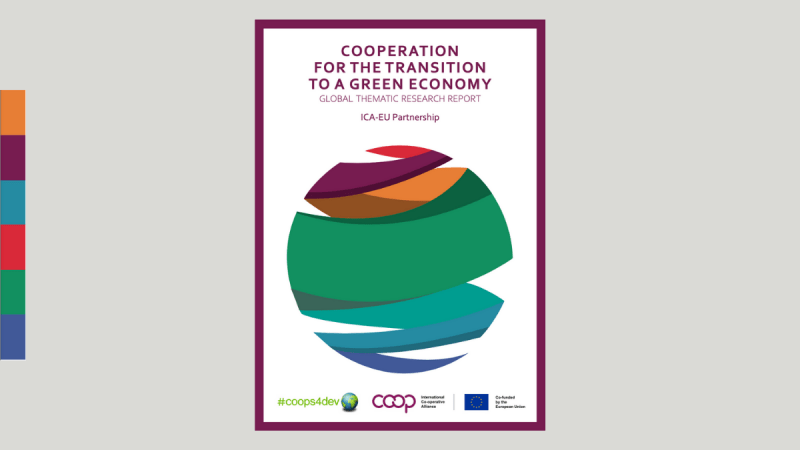
With a specific focus on how principle seven on concern for community is put into action, the report covers 8 case studies from all ICA regions and showcases a variety of environmental actions from cooperative enterprises. Examples include the access and management of natural habitats and resources through cooperative approaches, innovative responses to minimise environmental impacts, and programmes and good practices from ICA members. It features cooperatives of varying sizes and areas of activity, specifically in the energy, forestry, housing, transport, and finance sectors.
The report demonstrates that cooperatives contribute to sustainable practices in a variety of ways. For instance, by organising the provision of ecologically sound services such as renewable energy, or through cooperative education and training on the environment. Overall, the cooperative enterprise model can be a viable alternative to business as usual and is set to become an enterprise model of choice in tackling climate change and environmental degradation.
The publication also focuses on cooperative contributions to the UN Sustainable Development Goals (SDGs), including SDG 13 on climate action and SDG 7 on clean and renewable energy. It suggests there is a clear need for meaningful action and places a clear emphasis on the necessity of systemic economic and social change to rise to the climate challenge. This perspective is amplified against a new backdrop of insecurity and urgency since the onset of the COVID-19 pandemic, alongside the recent assessments of the Intergovernmental Panel on Climate Change(IPCC).
The report was endorsed by key stakeholders, including high level representatives from the cooperative movement, civil society, and research bodies of the United Nations. Ilcheong Yi, Senior Research Coordinator of the United Nations Research Institute for Social Development (UNRISD) stated:
"Illustrating how the cooperative movement as a model of ecological equilibrium incorporates the values of cooperation, solidarity, self-management and democracy in planet-centred development approaches, this research contributes to developing holistic policies and institutions to achieve economic, social, and environmental objectives. I recommend it as a must-read for those searching for a realistic means of sustainable development in 2021 and beyond".
The ICA-EU Partnership on international development (also known as #coops4dev) was signed in 2016 between the International Cooperative Alliance and the European Commission to strengthen the cooperative movement as key actor in international development.
Read more about #coops4dev on our website.
https://www.ica.coop/
Related news
- Cooperatives Build a Better World: The 2025 International Year of Cooperatives theme
- China spends nearly US$400 million purchasing cassava from Vietnam
- Cashew exports in April hit record high
- Ample room remains for Vietnamese exports to Africa
- Vietnam becomes global production centre thanks to boom of foreign investment
- Roundtable calls for investment in agri-tourism real estate
- ASEAN consumes half of Vietnamese fertilizer exports
- Up to 551 million poultry heads raised for meat, eggs across Vietnam
- HCM City, Cuba partner in agricultural development
- Chinese traders to enter Vietnam for lychee purchase


